


Bulletin: opportunities, events, and news from across the JOPRO network.
October was another full month at JOPRO. This edition looks back at what took place and points ahead to what is coming in November and through to early 2027.
New Fall Programming: Thursday - Friday Sessions
This fall, a core set of JOPRO’s weekly sessions moved to a Thursday & Friday format, alongside existing standing meetings. Thursday is a reading session, where members work through source materials; Friday serves as technical session for building and examining small models. These sessions bring together the Cognition Futures Reading Group and the cybernetics interest group, and a cluster of interests around multi-agent interaction.
A line of inquiry in October was Stefano Franchi’s paper on W. Ross Ashby’s homeostat, “Homeostats for the 21st Century? Simulating Ashby Simulating the Brain,” read and discussed across several sessions.
Developing Research Agendas
This month, Avery Lim and Jesse Parent published “The Questions We Stopped Asking”, the first in a series on mediated gestalt inference. The post argues that holistic inquiry is undervalued in how research is funded and ranked, and sets out the groundwork for a longer program of work, including a companion in-preparation position and framework manuscripts.
“The investigation of the structure of insight and integratory processes within computational, formalist, and discursive systems holds immense potential. I’m glad to have brought together so many of my thoughts on this, and I hope this work can serve as a rallying call over the long term for others interested in this frontier.” - Avery Lim
Research Outputs and Presentations
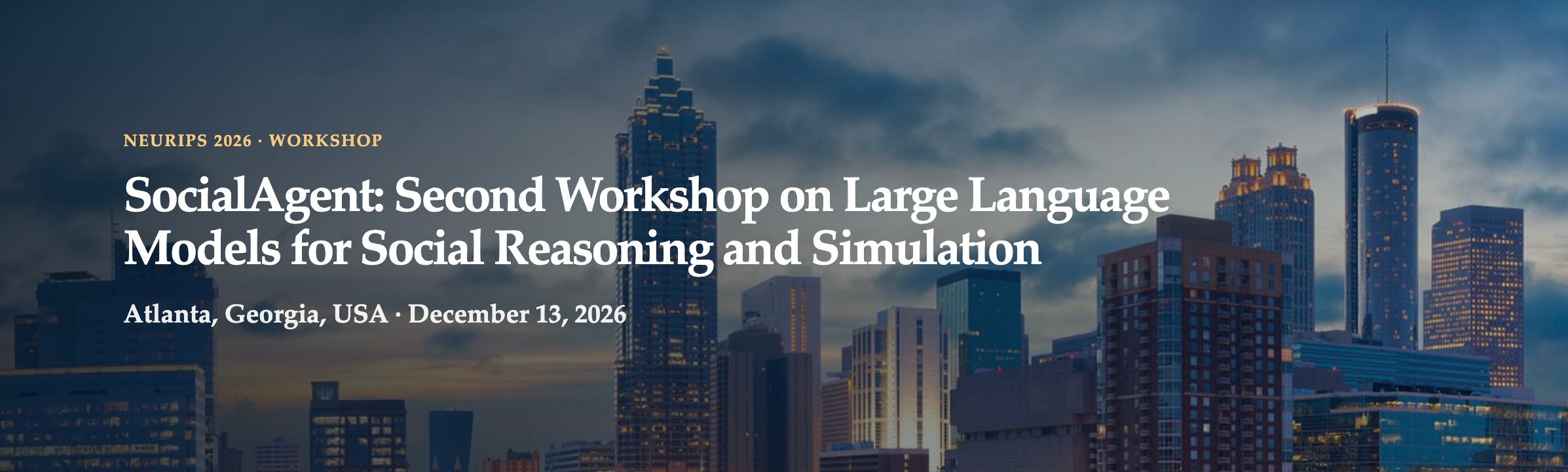
SocialAgent@NeurIPS. Sarrah Bastawala’s research on LLAMOSC, “Governance as a Safety Net: An LLM Agent-Based Study of Open-Source Community Sustainability” with Himanshu Chougule, Jes Parent, and Bradly Alicea , was accepted as a poster at SocialAgent: Second Workshop on Large Language Models for Social Reasoning and Simulation, during NeurIPS 2026 in Atlanta.
From homeostat to primitives. In October, Avery Lim and Jesse Parent presented “From Homeostat to Universal Domain Primitives” at the Orthogonal Research and Education Lab. The talk set out how their current work continues Ashby’s and Franchi’s, and its possible connections to Allostasis Machines, Contextual Geometric Structures, and earlier work, with directions for what comes next.
Substrate-Agnostic & Non-uniformity research program. October also saw substantial work on the research program behind the mediated gestalt inference series: how the sciences of mind and agency choose their abstractions, and whether they say what they leave out.
We Robot 2027. JOPRO members, including several from the Data x Direction program, submitted to the call for We Robot 2027, held at Oxford University’s Institute for Ethics in AI. The JOPRO community has been involved with We Robot since 2022 in Seattle, and we hope to continue this involvement with one of our favorite conference series.
People
Tlamelo Makati joins as a Visiting Scholar. Makati’s work centers on digital accessibility and active inclusion: making sure people with lived experience of disability have a say at every stage of how machine learning tools are built. This semester she is an assistant lecturer in mechatronics engineering at Technological University Dublin, and next year she begins a postdoc with the Data Science for Social Impact Lab at the University of Pretoria. Makati will be featured in an upcoming In Conversation series, where she will discuss her research origins and future plans for developing her active inclusion-based frameworks.
S. Hussain Ather was accepted to the Kris Rockwell Foundation’s “Cybernetic Futures: Intelligence, Consciousness, and the Path of AI” call.
Out in the network
JOPRO members were also active at events around Boston and beyond.
October 6. JOPRO members attended Cody Turner’s (Bentley University) talk “The Moral and Epistemic Harms of AI Sycophancy” in Victor Kumal’s AI Ethics Lab Talk Series at Boston University.
October 8. JOPRO members attended the MIT Media Lab launch of Sherry Turkle’s Artificial Intimacy, hosted by Advancing Humans with AI and co-hosted by the Octet Collaborative and MIT’s Social and Ethical Responsibilities of Computing program.
November 7. Jennifer Jiang will return to the 15th Asian American Women in Leadership Conference, hosted by ASPIRE in Boston. We hope to share a short piece or interview about the experience.
From our partners at the Orthogonal Research and Education Lab: Bradly Alicea’s recent conference roundup covers OREL’s work at Artificial Life 2026 and BICA*AI 2026, including a talk on ensemble models of early life with co-authors including S. Hussain Ather, and work with Morgan Hough on psychiatric BICAs.
Also, “Declared Abstraction: On Bracketing and Saying What You Leave Out”, by Jes Parent, takes a second look at Rosenblueth, Wiener, and Bigelow’s 1943 paper “Behavior, Purpose and Teleology,” and asks what a method sets aside, whether it says so, and what that costs.
These and other October happenings bear on questions JOPRO members have been working on about how people relate to AI systems, explored in “Open strands on Human-AI relationships.”
Ahead
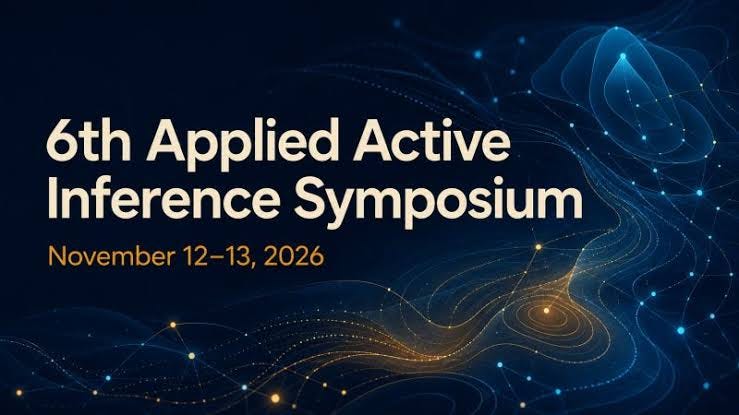
November: 6th Applied Active Inference Symposium. Co-organizer Bradly Alicea continues his work with the Active Inference Institute’s 6th Applied Active Inference Symposium, leading an interactive workshop, an in-depth discussion on “World models in natural and artificial intelligence.” This builds of of work featured in the Royal Society A Phil. Transactions Special Issue volume 384: World models in natural and artificial intelligence. It features Alicea, Nelson, Hough, and Parent’s contribution of A ‘good’ regulator may provide a world model for intelligent systems.
November 14: Algorithmic Justice League - Decade of Impact. JOPRO members will attend the Algorithmic Justice League’s celebration of ten years of work against algorithmic harm, at the Museum of Science in Boston. The program includes emcee Dr. Avriel Epps, a keynote by Dr. Alondra Nelson, and the Global AI Justice Award. For those joining remotely, the livestream runs 6:30 to 8:00 pm ET, followed by a hybrid discussion on the JOPRO Discord. It is part of JOPRO’s fall series of AI ethics socials; details on Luma. In-person entry requires a ticket from the Algorithmic Justice League.
December: NeurIPS 2026. Sarrah Bastawala’s LLAMOSC work will be presented at the SocialAgent workshop on December 13 in Atlanta, part of the Social Agents Workshop Series.
Spring 2027: JOPRO @ WMU. JOPRO is organizing and hosting an event at Western Michigan University, on the philosophy and history of science, multidisciplinary methodology, alongside recent work from the Cognition Futures and Center for Futures Studies. If you are interested in supporting, collaborating, or presenting your research, get in touch.
Stay tuned for more public events, including JOPRO Socials at NeurIPS, the Boston Museum of Science, and upcoming events in the greater Boston-Cambridge area. Subscribe here below, and follow the JOPRO calendar on Luma for announcements.
JOPRO supports interdisciplinary scholarship, cultivates emerging researchers, and builds the networks that connect them.